Learn English with Hope
Learn English with confidence.
Learn how to speak English naturally at work, in job interviews, and in real life.
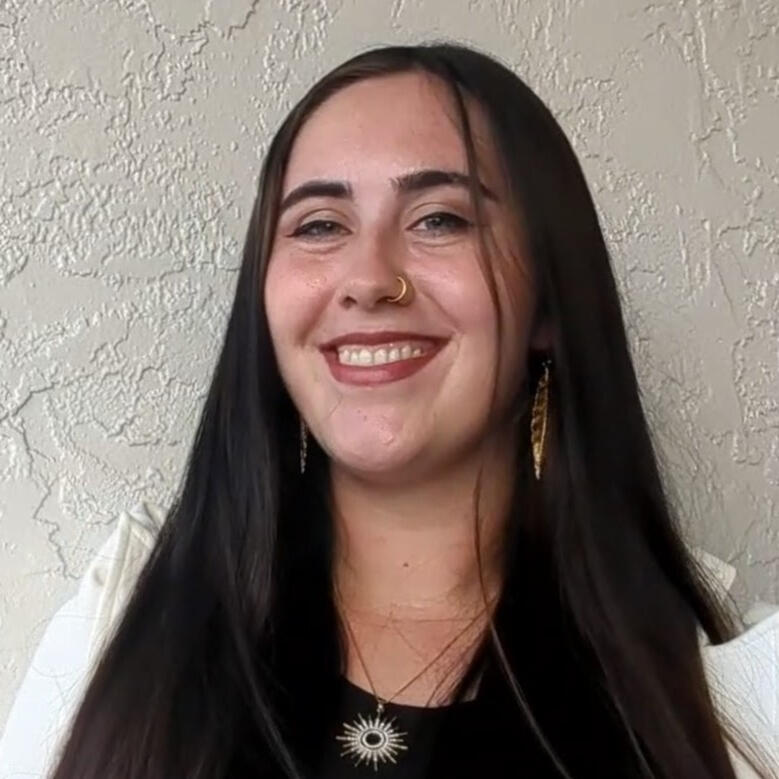
Hi, I'm Hope🗽
I’m an English teacher from Reading 🏯 Pennsylvania, in the United States.My classes are relaxed, practical, and focused on natural-sounding communication. No textbook English!
I don’t believe students learn by memorizing rules. I prefer to teach through real examples and conversation-focused learning.I work with students of many different levels, especially people who want to:
✔ build their confidence
✔ prepare for job interviews
✔ speak fluently
✔ use English at work
✔ practice real-life conversationMy goal is simple: I want to help you use English confidently and fluently 😊
Classes I Offer

Business English
Improve your professional English communication for work, meetings, and presentations.✔ professional vocabulary
✔ presentation help
✔ conversation practice
✔ workplace English

Job Interview Coaching
Get intensive practice with real interview questions, and learn how to give stronger answers.✔ mock interviews
✔ stronger answers
✔ more confidence
✔ professional vocabulary
Conversational English
Practice real conversation to help you speak more naturally and confidently.✔ real conversation
✔ pronunciation help
✔ fluency
✔ slang & useful vocabulary
Hear what students have to say!
Book a trial class. $15, 30 minutes, no commitment.
Learn English with Hope
About Me
🎓 Education
2022 – 2023
Bachelor's Degree in Anthropology
Franciscan University of Steubenville2018 – 2020
Associate Degree in Anthropology
Reading Area Community College2022
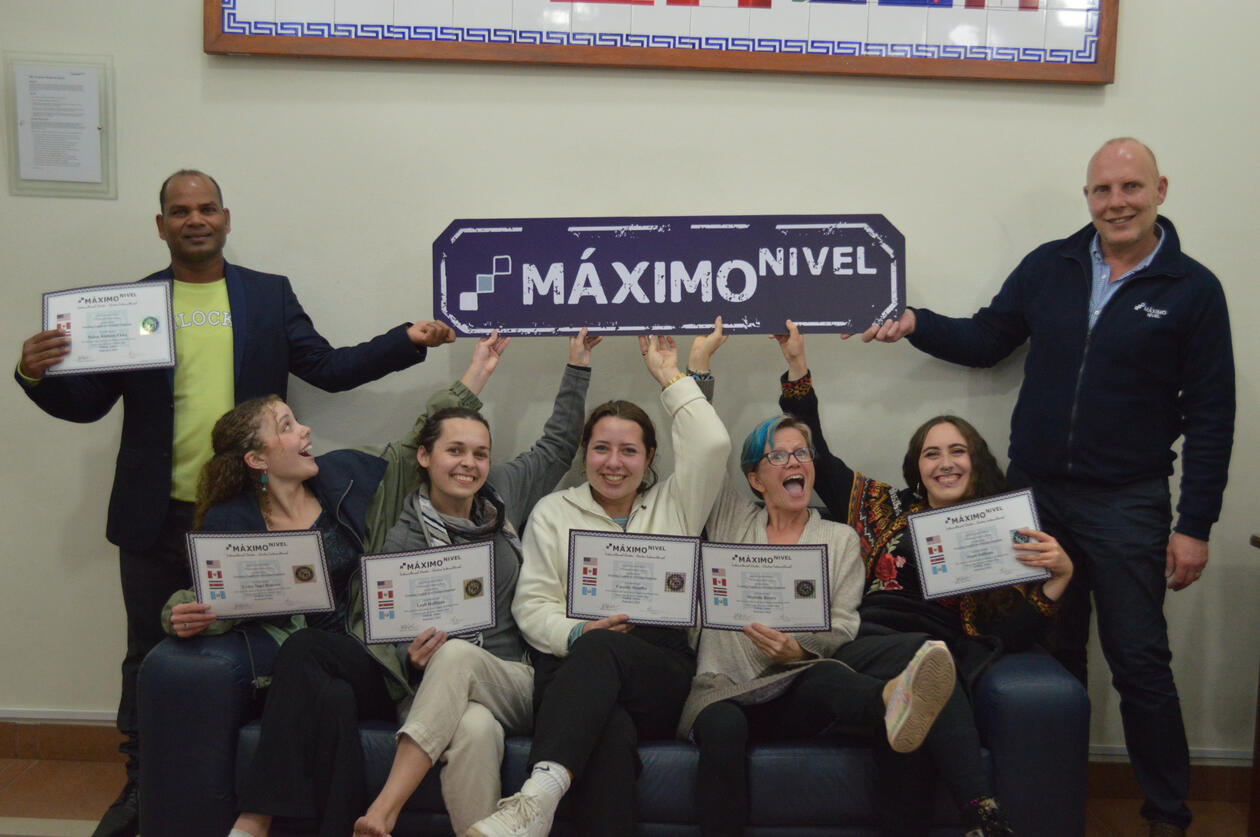
TEFL Certification (Teaching English as a Foreign Language)
Máximo Nivel
Cusco, Peru2026
Teaching Business English Certification
Máximo Nivel
💼 Professional Experience
2025 – 2026
English as a Second Language (ESL) Teacher
TeachCast – Indonesia (Remote)
Taught English as a second language to students of all ages and proficiency levels, from children as young as 5 to adults.2021 – 2022
Volunteer
Máximo Nivel – Cusco, Peru
Studied Spanish, taught English, and supported the local community through education, cultural exchange, and community service projects.🌎 Languages
English — Native
Spanish — Advanced
Mandarin Chinese — Basic
More About Me
Here are some facts about me as a person:
Language Lover: I’ve studied Spanish for over 5 years and Mandarin Chinese for 3 years.
Travel Enthusiast: I’ve visited China, Peru, Puerto Rico, and many places across the U.S.
Culture & History Buff: I studied anthropology in college and love learning about different cultures.
Interests: History, archaeology, and documentaries.
Fun Side: Fitness, dancing, and exploring new places.
I know learning a new language can be hard. I will help you feel confident and comfortable in every lesson!
Me as a Teacher 🎓
A little about me as your teacher:
🎓 I got my TEFL certificate in Peru 🇵🇪
I taught English in a small village near Cusco 🦙
I teach all levels: beginner to advanced
I focus on clear pronunciation, neutral accent, and natural word choice
I can teach casual and business English!
I am patient and friendly 😊 I will help you speak with confidence and enjoy learning English!
My Teaching Style ✏️
Here's what I bring to the classroom:
I use immersion: we speak only English 🗽
❌ No boring grammar rules. I show many examples first, so you can discover the rule on your own. Context is the best way to learn!
You speak more than me. I give you lots of time to talk ⏱️
💡 I'll help you remember English easily
I know English can be hard. I make lessons simple, clear, and fun 😊
Learn English with Hope
Classes
Job Interview Coaching 🤝
This program is designed for students who want to feel more prepared for English job interviews.During our classes, we'll practice common interview questions, strengthen your answers, and work on communicating clearly and professionally. You'll learn how to talk about your experience, skills, and accomplishments in a naturally and with confidence.Most students are ready in 4–6 sessions, depending on their English level and goals. Each lesson is tailored to the position you're applying for and your specific needs, so every practice session is useful and relevant.Whether you're preparing for your first job interview in English or looking to make a stronger impression, I'll help you walk into your interview feeling more confident and ready to do your best.
Prices:Job Interview Fast-Track — $130
+2 classes — $70
+1 class — $40
Business English 💼
Business English classes are designed for professionals who want to communicate more confidently and naturally at work. Whether you use English for meetings, interviews, presentations, emails, or negociations, these classes focus on practical skills you can put to use from day one.Each lesson is tailored to your goals and English level. We'll work on your speaking skills, vocabulary, pronunciation, and professional communication in a relaxed and supportive environment. Rather than memorizing business terms, you'll learn how English is actually used in real workplace situations.My teaching style is practical and conversation-focused. You'll have plenty of opportunities to speak, ask questions, and build confidence through realistic activities and real-world scenarios.Whether you're preparing for a new job, working with international clients, or simply looking to improve your professional English, these classes will help you communicate more clearly, confidently, and naturally.
Prices:Single class — $40
4-class package — $150
8-class package — $280

Conversational English 💬
Conversation classes are a great way to build confidence and feel more comfortable speaking English.In these classes, we focus on real conversations and practical communication. You'll spend most of your time speaking, sharing ideas, and using English naturally. Along the way, I'll help you improve your pronunciation, expand your vocabulary, and express yourself more clearly.Each lesson is tailored to your level and goals. Whether you're learning English for travel, work, or everyday life, my goal is to help you feel more confident and enjoy the process of speaking English.Don't worry if you're a beginner! These classes are open to students of all levels, including those starting from scratch. My lessons are relaxed, friendly, and designed to help you improve step by step.
Prices:Single class — $35
4-class package — $120
8-class package — $220
To view packet rules and cancellation/rescheduling policies, click here
Each class is 50 minutes
All prices are in USD
Still not sure?
Book a trial class. $15, 30 minutes, no commitment.
Learn English with Hope
Learn English with Hope
Book a Class
Book a trial class. $15, 30 minutes, no commitment.
Job Interview Coaching
4-Session Fast-Track
+2 Sessions
+1 Session
Business English
8 Session Package
4 Session Package
Single Session
Conversational English
8 Session Package
4 Session Package
Single Session
Learn English with Hope
Free Resources
Follow me on social media! I post new content regularly to help you learn English.
Also, check out my Quizlet!
There you'll find flash cards to learn new vocab, with topics like filler words, phrasal verbs, workplaces skills, and more!
Articles
The Ultimate Guide to English Numbers (beta)
Learn English with Hope
Thanks!
I've received your message. I'll be in contact with you shortly.
Learn English with Hope
Policies
I use Google Meet for my lessons. At the moment, I don't offer in-person classes.Guide to Using Google Meet:
You'll need a Google account to join. This can be your Gmail account. You'll also need a device with a microphone and camera, such as a laptop, tablet, or phone.
To join a Google Meet video call, click the invitation link you received by email.
Click Join now or Ask to join.
Wait for the host (me) to let you in.
There is a 24-hour cancellation and rescheduling policy. If you do not cancel or reschedule your lesson at least 24 hours in advance, the lesson will be considered used and charged as usual.Packages: All lessons in a package must be used within a specified time period:
4-session packages: 90 days.
8-session packages: 185 days (approximately 6 months).
Any unused lessons will automatically expire after this period.
If you have any questions, don't hesitate to contact me :)
I only offer classes to students 13 years old and older.
Learn English with Hope
The Ultimate Guide to English Numbers
this article is still a work in progress. It is not completed yet.Do you want to know how to use all numbers confidently in English? Sure, many people know how to count to 1-10, maybe even 1-100, but do you know how to tell time? Can you read historical dates or describe money? Can you say a number with a lot of zeros, like 1,000,000,000? Do English speakers struggle to understand your pronunciation, and think you meant 30 when you said 13? This article will show you everything there is to know about numbers in English.Part 1: Counting
We’ll start simple.
1-10
1: one /huan/
2: two /tuu/ (long ‘o’)
3: three /thrii/ (not ‘tree’) put your tongue between your teeth, and blow. Three.
4: four
5: five /faiv/ (asegurate que pronuncies el ‘v’; no digas ‘fai’)
6: six /siks/
7: seven
8: eight /ey-t/ (long ‘ey’)
9: nine /nain/
10: tenGreat job!11-19
Pay attention to pronunciation here.
11: eleven
12: twelve
13: thirteen /thir-TEEN/ - emphasis on the ‘TEEN.’ If you say ‘THIR-teen,’ it will sound like 30
14: fourteen /four-TEEN/
15: fifteen /fif-TEEN/ (not ‘fiveteen’)
16: sixteen /siks-TEEN/
17: seventeen /seven--TEEN/
18: eighteen /eyt-TEEN/
19: nineteen /nain-TEEN/
Did you know why 11 and 12 are so different from 13-19? In ancient English, people counted with a base-12 system. Today, we use a base-10 system. This means we have 10 number symbols total, 0-9, that we use to write every number in existence! The ancestors of the English, on the other hand, had 12 number symbols. After they counted to 12, they had to reuse numbers.
* Para los angloparlantes, el concepto de los ‘teenagers’ (adolescentes) es vinculado con los números. La adolescencia empieza a los 13 años de edad, y oficialmente termina a los 19 (pero a veces la gente dice que termina a las 17 porque legalmente se consideran adultos a los 18 años). Cada año de adolescencia, los teenagers (or teens), tiene el sonido ‘teen’ en el número.20-90
20: twenty /TWEN-ni/
30: thirty /THIR-di/ (remember: emphasize the first syllable, ‘THIR.’ Saying ‘thir-DI’ sounds too much like 13).
40: forty /FOR-di/
50: /FIF-di/ (not: five-di)
60: /SIKS-di/
70: /SEVEN-di/
80: /EY-di/
90: /NAIN-di/100-900 (hundreds)1,000 (thousands)Let’s practice saying these numbers:Really big numbers:
10,000 (ten thousands)
100,000 (hundred thousands)
1,000,000 (millions)
10,000,000 (ten millions)
100,000,000 (hundred millions)1,000,000,000 (billions)
1,000,000,000,000 (trillions)
1,000,000,000,000,000 (quadrillions) (uncommon)
1,000,000,000,000,000,000 (quintillion) (very uncommon)Practice:Part 2: Money
Let’s practice with examples.
Say these prices aloud:$8.99: eight dollars and ninety-nine cents /sents/
$24.50: twenty-four dollars and fifty cents
$137.72
$1,250.58
$12,499See the pattern? ___ dollars and ___ cents.Common mistake: $8.99: dollars eight and ninety-nine cents.
Why is it wrong?There is another way we talk about prices that’s shorter.
Say these prices aloud:$8.99: eight ninety-nine
$24.50: twenty-four fifty
$137.72
$1,250.58
$12,499Bills and Coins
In the United States, we have different types of physical currency (cash):
💵 Bills
$1 bill
$5 bill
$10 bill
$20 bill
$50 bill
$100 billMost of our bills have former U.S. presidents on them. Which bills don’t?🪙 Coins
penny = 1 cent
nickel = 5 cents
dime = 10 cents
quarter = 25 centsYou might see many quarters with different backs. While all quarters have the same face, with the head of first U.S. president George Washington, every few years the backs change in design to follow a theme. We have quarters with the different U.S. states, territories, national parks, and other designs minted on their backs.Old Money
These are rare or no longer being made, but you can still buy things with them.$2 bill
Half dollar coin (50 ₵)
Dollar coin ($1)Heads or Tails?
Like in many other countries, Americans will sometimes do a coin toss if they want to make a decision or see who goes first in a game. They will flip a coin, usually a quarter because it is the largest. If you say “heads” then you want the coin to land face up, showing the president’s head. If you say “tails” you want the coin to land with its back up.American Money SlangBuck = 1 dollar
Dough / bread = money
Chump change = a very small amount of money
Grand / K = $1,000
Examples:
“Gimmie 5 bucks, I’ll pay you back.”
“That’ll be a buck fifty.” (That costs $1.50)
“Let’s get this bread!” (Let’s make money)
“I only have chump change, so I can’t buy that.”
“I have five grand in my bank account. She only has 2K in hers.”Slang Practice:
How many bucks do you have in your pocket right now?
Do you have enough dough to make it through the week? (or: do you have enough money to cover your weekly expenses?) If not, go get that bread!
Who in your family always has only chump change?
How many grand does it cost to buy a house?Using the Thousands
In English, sometimes we say big numbers differently, especially when making a big purchase, like a car.For example:
$1,500 can be “one thousand five hundred” OR “fifteen hundred”Let’s look at more examples.
The car costs fifty-five hundred ($5,500).
I spent twelve hundred dollars ($1,200) on a new sofa.
What do you mean they’re charging twenty-four hundred ($2,400) for catering?!Note: We can only say “___ hundred” if the number ends in “00” and is between 1,000 – 9,900.❌ Incorrect: 3,429 – “thirty-four hundred twenty-nine” – this number doesn’t end in “00,” so we can’t use the word “hundred.”
✅ Correct: thirty-four hundred (3,400)❌ Incorrect: 10,100 – “one hundred one hundred.”
✅ Correct: ninety-nine hundred (9,900) is the highest you can go.Let’s Practice!
Say “___ hundred”:$1,200
$3,400
$1,600
$2,300
$4,700
$5,800Part 3: Historical Dates
You might have noticed that English speakers use strange numbers to talk about past years. What the heck is fourteen eighty-two?? Here I’ll show you what’s happening.Columbus discovered America in fourteen ninety-two (1492).
World War II (WWII) ended in nineteen forty-five (1945).
The United States was founded in seventeen seventy-six (1776).
In eighteen fifteen (1815) Napoleon was defeated.What pattern did you notice?Centuries:
The Industrial Revolution happened during the 1800s (eighteen hundreds), and the Renaissance began in the 1300s. But, the World Wars didn’t happen until the 20th century.You can refer to an entire century by putting an ‘s’ at the end of it.
1700s (seventeen hundreds - from 1700 to 1799)
1400s (fourteen hundreds)
1800sYou can also refer to a century by its cardinal number.
20th century: 1900s
21st century: 2000s (two-thousand’s)
13th century: 1200s
First century: 0-00 CE
Decades:
You might hear people talk about 80s (eighty’s) rock or the hippie movement of the 1960s (nineteen sixty’s). The 1770s were famous for the Declaration of Independence, but the 40s were when World War II killed millions of people.
Before 1900: You can refer to an entire decade by putting an ‘s’ at the end of the year.
The 1780s (seventeen eighty’s)
1410s (fourteen ten’s)
1320s (thirteen twenty’s)
1900-1999: You can refer to an entire decade by putting an ‘s’ at the end of the year, or at the end of just the last two numbers of the year.
1960s (nineteen sixty’s)
80s (eighty’s)
50s (fifty’s)
Roaring 20s (yes, we do call it that, because of the explosion of culture that happened during that decade in the U.S.)
2000s
2000 – 2009: ALWAYS “two thousand, two thousand one, two thousand two, etc.”
2010-present: can be BOTH “twenty ten” or “two thousand ten.”
✅ “Twenty twenty-six” or “two thousand twenty six.” ✅Part 4: Telling Time